Treating Summer Sinus Infections That Block Your Ears
Summer in the western North Carolina mountains gives you plenty of reasons
By: admin | August 24, 2026
Summer in the western North Carolina mountains gives you plenty of reasons to get outside. The trails get busier, tubes and kayaks return to the rivers and weekends fill up quickly.
A sinus infection can put a damper on those plans, especially when your ears start feeling plugged at the same time. Suddenly, conversations sound different and that pressure in your head seems to have found its way to your ears.
That combination can be confusing if you usually think of sinus trouble and hearing as separate issues. Why would congestion change what you hear?
And why can your ears still feel off even when the worst of the sinus pressure has passed? The connection between the two can explain a lot about what you’re noticing during a summer sinus infection.
A summer sinus infection often begins with swelling inside the nose. Seasonal allergies can cause that swelling when pollen bothers the nasal passages for days at a time.
Once the openings to the sinuses become narrowed, mucus may not drain as easily. That can leave you feeling congested even though you don’t have a typical winter cold.
Viruses can still circulate during warmer months too. Spending more time indoors with air conditioning may dry the nasal passages, which can make them feel irritated.
For some people, swimming also bothers the nose when chlorinated water gets inside. Summer doesn’t directly cause a sinus infection. It simply brings conditions that can affect how your nose and sinuses feel.
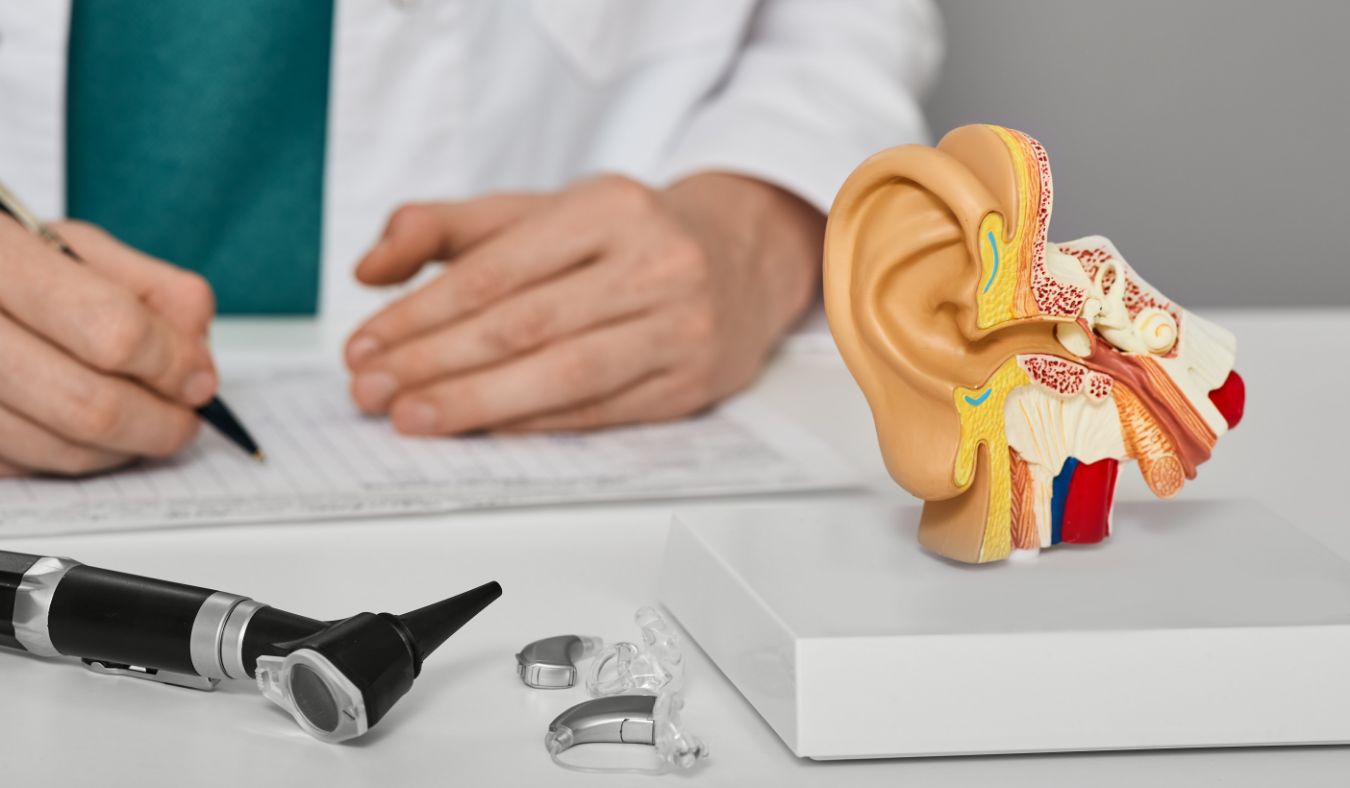
Your ears and sinuses share a connection through the Eustachian tubes, which run from the middle ear to the back of the nose. When swelling reaches that area, those narrow passages may not open as freely as they normally do.
Air then has a harder time moving in and out of the middle ear. That pressure difference can leave the ear feeling plugged even though there is nothing physically stuck inside the canal.
Fluid can also become trapped behind the eardrum when the tubes are not draining well. That changes how easily the eardrum moves and may make sounds seem muffled for a while.
The ear itself is not always infected in this situation. Sometimes it is reacting to congestion elsewhere in the head.
Ear symptoms from sinus congestion often show up while your nose and face are feeling congested too. You might notice:
Ear pressure from sinus trouble often shows up at the same time as a stuffy nose or facial pressure. Your ear may feel closed off when your congestion is at its worst.
Then it may pop briefly when you swallow, yawn or change position. The feeling can return a few minutes later if the congestion is still there.
Think back to which symptom came first. Ear pressure that started during a sinus infection may clear as you recover.
If your nose feels normal again but one or both ears still feel plugged, something else may be keeping that pressure around.
What you can hear may tell you more than the plugged feeling itself. Congestion can make sounds seem dull for a while, almost like you’re listening with an ear covered.
As the pressure changes, that muffled quality may come and go too. You might even notice your hearing seems different after a shower, a night’s sleep or several hours upright.
Not every change follows that pattern. Sudden hearing loss, strong pain, drainage from the ear or dizziness shouldn’t be assumed to come from sinus congestion.
Those symptoms need medical attention. If you’re unsure what you’re dealing with, an ear exam and hearing test can show whether the problem involves pressure, sound conduction or hearing itself.
Mild pressure from congestion may ease as the Eustachian tubes begin opening normally again. While you’re at home, you can try a few gentle options:
Warmth can feel soothing when sinus congestion leaves pressure around your ears and face.
A warm, damp washcloth held against the affected side for several minutes may ease some of that discomfort. Keep the temperature comfortable against your skin rather than making the cloth as hot as possible.
Steam works a little differently because it adds moisture to the air you breathe. Sitting in a steamy bathroom after a shower may help loosen nasal congestion, which can sometimes change the pressure you feel in your ears.
Neither method physically removes fluid from behind the eardrum, so don’t expect an immediate pop. They are mainly ways to stay more comfortable while the congestion settles.
When you’re congested, drinking water throughout the day can keep mucus from becoming thick and harder to clear. That matters for your ears because congestion near the Eustachian tubes can affect pressure behind the eardrum.
Keep water nearby and drink when you’re thirsty rather than trying to hit an exact number of cups. Your needs can change depending on how active you are and how much time you spend outside.
During a hot western North Carolina summer, you may drink more than you would on a cooler day. Water isn’t going to make a blocked ear open immediately, but it can be one part of taking care of yourself while the sinus infection runs its course.
Blocked ears from sinus congestion often ease as the infection clears, but not every case follows that pattern. If the pressure hangs on well after your other symptoms improve, an ENT specialist can check for fluid behind the eardrum or another reason the ear still feels closed off.
The same applies when the problem keeps returning on one side or starts affecting how well you hear.
An ENT can look beyond the ear itself and check whether the nose, sinuses or Eustachian tubes are part of what is going on. That can be especially helpful when the blockage keeps coming back with every sinus infection.
Instead of continuing to treat the pressure on your own, you get a better idea of what is causing it and whether anything else needs attention.
One way to reduce sinus trouble is to deal with nasal irritation before it turns into days of congestion. If seasonal allergies tend to bother you, follow the plan your ENT specialist has recommended instead of waiting until symptoms are already strong.
Washing your hands often can also cut down on the viruses that sometimes start the whole cycle. Smoke and other airborne irritants can make the nasal lining more reactive, so avoiding them when possible can give your sinuses a better chance to stay open.
Give your body time to recover after long days outside, especially when heat or poor sleep leaves you run down.
If you use a saline rinse, stick with distilled, sterile or previously boiled water and clean the device after each use. Keeping the nose clear and less irritated can reduce the chance that congestion reaches the Eustachian tubes and starts affecting your ears.
You may feel ready to get back to your usual routine before your ears have completely caught up. A little lingering pressure can happen as the congestion clears, and you may notice it more at certain times of day.
What matters is whether that plugged feeling keeps improving or stays with you after the rest of the infection is gone. You know how your ears normally feel.
When something still seems different days later, you don’t have to keep waiting and wondering what is happening behind the eardrum. At Mountain Ear, Nose and Throat Associates, we can examine your ears and sinuses during the same visit.
Call our Sylva office at (828) 586-7474, Franklin at (828) 524-5599, Murphy at (828) 835-1014 or Candler at (828) 458-8100. We can take a closer look and talk with you about what comes next.
Summer in the western North Carolina mountains gives you plenty of reasons
By: admin | August 24, 2026

Spring in the mountains of Western North Carolina is genuinely beautiful,
By: admin | May 18, 2026

You notice it at odd moments. Swallowing and feeling like your ear needs
By: admin | March 25, 2026
Our family-friendly staff and team of ENT’s are standing by to provide you with the best ear, nose and throat care options available in Western North Carolina!